
.jpg)
.jpg)




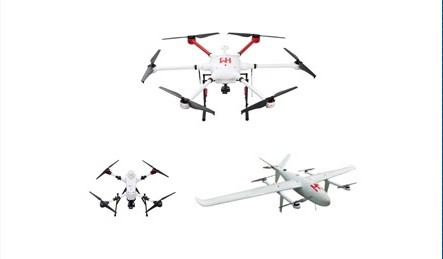
On the edge of the Qinghai-Tibet Plateau, known as the “Roof of the World,” the Sichuan-Tibet Railway winds through mountains and valleys like a giant dragon, writing a magnificent chapter in the history of human engineering. At the same time, a critical initiative to safeguard this vital railway lifeline has reached an important milestone: the first batch of supplementary emergency rescue equipment long awaited by the Sichuan Emergency Rescue Team and the Tibet Emergency Rescue Team for the Sichuan-Tibet Railway has been successfully delivered, including Huimingjie reconnaissance UAVs and firefighting UAVs.
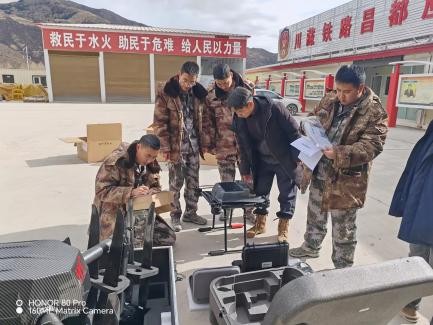
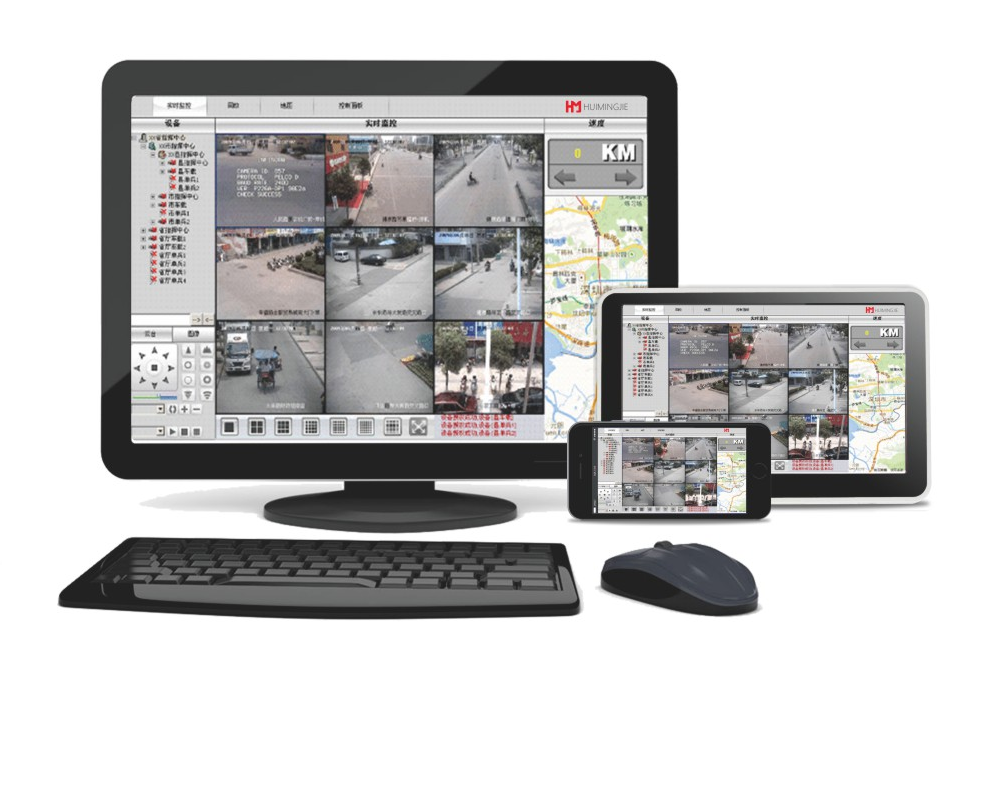
The Huimingjie reconnaissance UAV features a lightweight, high-strength carbon fiber airframe, excellent aerodynamic design, and flexible flight performance, enabling it to operate effectively in mountainous and canyon environments. Equipped with a four-sensor gimbal camera, it can capture ultra-HD images during the day and conduct precise infrared thermal imaging at night. The system ensures stable real-time video transmission back to the command center, providing critical data support for command decision-makers to quickly develop scientific, efficient, and accurate rescue strategies, significantly improving the efficiency and reliability of emergency decision-making.
.jpg)
The firefighting UAV is equipped with an advanced power system and intelligent batteries, enabling rapid response to fire incidents in complex terrain. Its dedicated firefighting water cannon payload allows precise control of the water spray direction, effectively helping contain the spread of fire. In addition, the UAV can carry fire-extinguishing bombs and release them through a payload release device for targeted fire suppression.
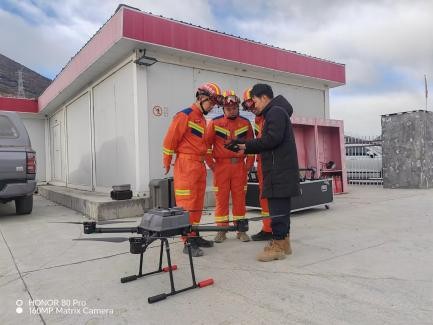
The deployment of these two types of UAVs not only fills a gap in the emergency rescue equipment system for the Sichuan-Tibet Railway, but also marks the entry of its emergency rescue capabilities into a new era of intelligent operations. Looking ahead, Huimingjie will continue to provide comprehensive support to both emergency rescue teams, helping them carry out rescue missions more efficiently and building a solid safety barrier for the sustained and stable operation of the Sichuan-Tibet Railway.